How HR leaders turn advocacy into influence in the C-suite

HR influence in the C-suite isn’t about advocacy alone, it’s about operating as a business leader. This article breaks down how HR leaders can translate people strategy into business outcomes through data, timing, and cross-functional partnership. Learn practical ways to earn trust, shape decisions, and build lasting influence at the executive table.
HR leaders are expected to be the voice of employees, championing engagement, culture, and wellbeing. But that voice often struggles to influence executive decisions that shape business outcomes. In today’s competitive labor market and fast-changing business landscape, HR influence at the C-suite level isn’t a nice-to-have; it’s essential for driving retention, growth, culture, and organizational performance. Without it, people strategy can feel disconnected from the decisions that matter most.
Nava recently hosted a roundtable with leaders from HR, finance, and marketing to unpack this challenge and share practical ways HR can move from advocacy to influence. The panel featured:
- Amy Frampton, Chief Marketing Officer at Nava Benefits
- Azar Kheraj, Chief Financial Officer at Nava Benefits
- Rachel Spector Whiffin, Head of People & Culture at Sleep.ai
- Abby Wilson, VP of Human Resources at rhode skin
This guide captures their real-world insights on how HR practitioners can connect people strategy to business outcomes, build trust with data and financial context, and turn a seat at the table into a place where decisions are shaped, not just discussed.
What does “a seat at the table” actually mean?
A seat at the table is not symbolic. It‘s operational. It means executive leaders trust HR to understand:
- How the business makes money
- What the company’s short- and long-term priorities are
- Where constraints exist, including budget, capacity, and timing
Without this context, HR input may be thoughtful, but it often feels disconnected from reality.
The most influential HR leaders advocate for employees and help the business win.
Why advocacy alone isn’t enough
Advocacy focuses on what should be better for employees. Influence focuses on how to make those improvements work for the business.
Influential HR leaders:
- Lead with business context, not programs
- Frame people initiatives as solutions to active business problems
- Acknowledge trade-offs instead of leading with ideals alone
The mindset shift: from HR advocate to business operator
Influence begins with different questions. Instead of asking, “What policy or program should we introduce?” influential HR leaders ask:
- What is the business trying to achieve right now?
- What is getting in the way?
- How do people, structure, or systems factor into that challenge?
When HR initiatives are clearly tied to business goals, they move from “nice to have” to strategic priority.

How should HR structure ideas for executive buy-in?
1. Start with the problem, not the solution
Executives engage when they agree there’s a real problem to solve. A strong problem statement explains:
- What’s happening today
- Why it matters to the business
- What risk exists if nothing changes
If leaders don’t align on the problem, the conversation stalls, no matter how strong the solution is.
2. Anchor people issues in business impact
People challenges gain traction when they affect outcomes leaders already care about, such as:
- Managers spending hours on manual admin instead of revenue-driving work
- Inconsistent performance systems delaying compensation or promotions
- Inefficient hiring slowing growth or increasing turnover
You don’t need perfect analytics. You need a clear connection between the people issue and the business consequence.

3. Present a recommendation, not just research
Executives expect HR leaders to have a point of view. A strong recommendation answers:
- What you propose
- Why it’s the best option
- What it will cost (even at a high level)
- What trade-offs exist
Offering multiple paths, such as phased rollouts or different investment levels, signals financial awareness and partnership. It also makes it easier for leaders to say yes to something, even if it’s not everything.
Why good HR ideas fail without financial context
Many HR initiatives fail not because they lack merit, but because cost enters the conversation too late.
Common mistakes include:
- Aligning on values without aligning on affordability
- Designing a “perfect” solution before modeling cost
- Presenting a single option that exceeds current constraints
A better approach is to:
- Share high-level cost ranges early
- Provide alternatives tied to different budget levels
- Show willingness to adjust scope without abandoning the goal
When HR demonstrates financial awareness early, trust grows and decisions move faster.
Why timing can make or break HR initiatives
The same initiative can succeed or fail based entirely on when it’s introduced.
Before bringing an idea forward, consider:
- Is this part of the current planning or budget cycle?
- Is the company focused on growth, efficiency, or cost control right now?
- What other priorities are competing for attention?
Many executive “no’s” are really “not now.”
Strong HR leaders plan ahead, align proposals with planning cycles, and treat timing as part of strategy, not an afterthought.
How HR builds influence before approval is needed
Influence is easier when leaders are already familiar with HR’s perspective. Effective HR leaders:
- Share a small, consistent set of people metrics
- Embed people data into existing leadership reports
- Create a predictable rhythm for updates
This positions HR as part of the operating cadence of the business, not a function that appears only when something is wrong.

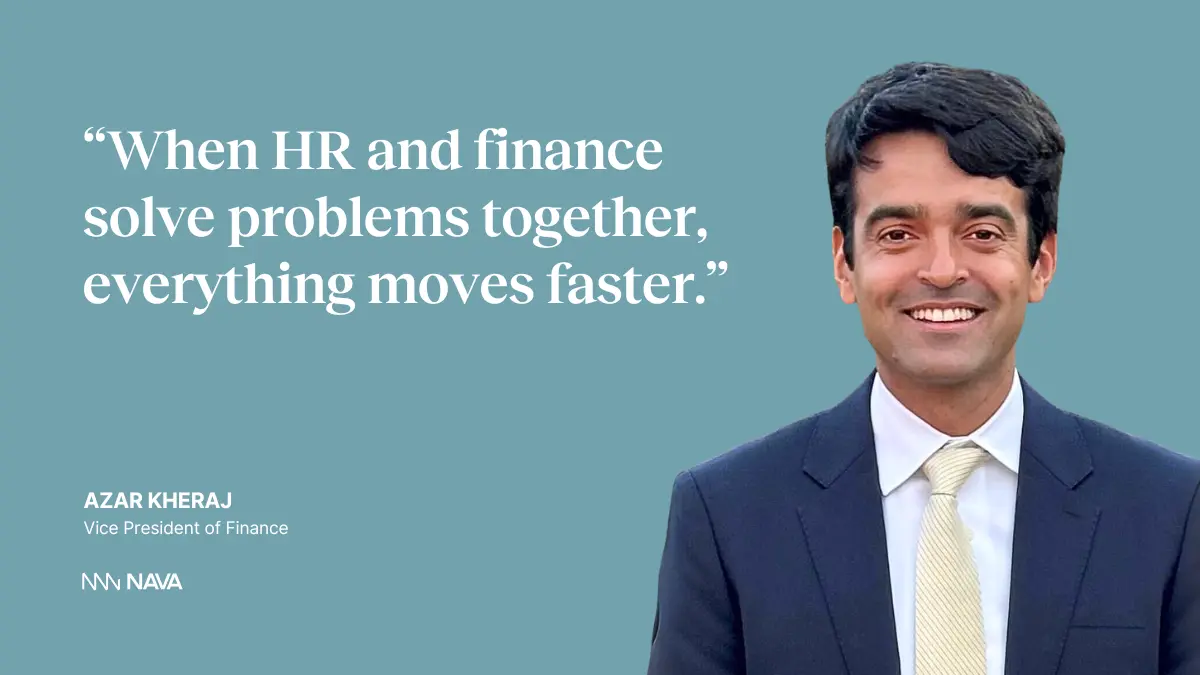
Why the HR–finance partnership is a force multiplier
The strongest organizations treat HR and finance as partners, not opposing forces.
Effective collaboration includes:
- Early conversations before proposals are finalized
- Transparency about constraints and trade-offs
- Joint problem-solving instead of approval-seeking
When HR understands financial realities and finance understands people implications, decisions improve and move faster.
What to do when HR is brought in too late
Being excluded from early conversations is frustrating, but how HR responds matters.
What erodes influence:
- Withholding support
- Saying “I told you so”
- Distancing yourself from the outcome
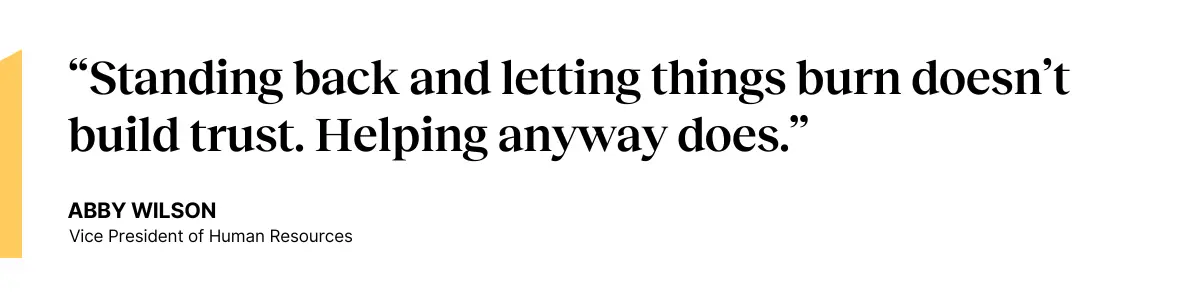
What builds influence:
- Offering data-informed guidance anyway
- Helping leaders mitigate risk
- Supporting execution, even when decisions weren’t ideal
Over time, this approach builds trust and increases the likelihood HR is brought in earlier next time.
Do you need perfect data to be credible?
The short answer: No. Start with a few consistent metrics, such as:
- Voluntary turnover
- Time to hire
- Internal mobility
- Exit feedback themes
Paired with employee context, even simple data can shape better decisions. Credibility comes from consistency, not complexity.
Final takeaway: Influence is built, not requested
HR influence in the C-suite isn’t about being louder or more persuasive.
It’s built by:
- Understanding the business deeply
- Framing people strategy as business strategy
- Using data to support—not replace—human insight
- Choosing timing and partnerships deliberately
When HR leaders operate this way, advocacy turns into influence, and the seat at the table becomes a place where decisions are shaped, not just received.

.webp)
.webp)