Broker RFP process guide: how to launch a winning benefits broker RFP

A benefits broker request for proposal (RFP) can unlock crucial information about the employee benefits marketplace, your own total rewards offering, and the level of support your HR team could receive. But the RFP process can be time-consuming, confusing, and difficult — unless you’re well prepared. Here are four steps to get ready for a smooth RFP process.
Choosing the right employee benefits broker is one of the most important decisions an employer can make. A well-run benefits broker RFP (request for proposal) helps organizations evaluate brokers objectively, compare service models, and select a long-term partner that aligns with business goals and employee needs.
In this guide, we’ll cover:
- What a benefits broker RFP is and when to launch one
- How to write a benefits broker RFP, step by step
- The most important questions to ask a benefits broker
- Best practices for evaluating RFP responses
This resource is designed for HR and people leaders running an employee benefits broker RFP for the first time or looking to improve an existing process.
What is a an employee benefits broker RFP?
A benefits broker RFP is a formal process employers use to evaluate and select an employee benefits broker. The RFP outlines your company’s benefits needs, goals, and expectations and asks brokers to explain how they would support your organization.
Companies typically use an employee benefits broker RFP to:
- Compare multiple brokers using consistent criteria
- Evaluate service quality, strategy, and transparency
- Understand fees, commissions, and compensation models
- Ensure alignment on compliance, cost control, and employee experience
A structured RFP process helps employers move beyond sales pitches and focus on how brokers actually deliver value.
When should you launch a benefits broker RFP?
There’s no single “right” time, but most companies issue a benefits broker RFP when something changes.
Common triggers include:
- Rising healthcare costs with limited strategic guidance
- Poor service levels or slow response times from current broker
- Lack of transparency into broker compensation
- Organizational growth, mergers, or geographic expansion
- A desire for more proactive, year-round support
Many employers run a benefits broker RFP every 3–5 years as a best practice, even if they’re generally satisfied with their current broker.
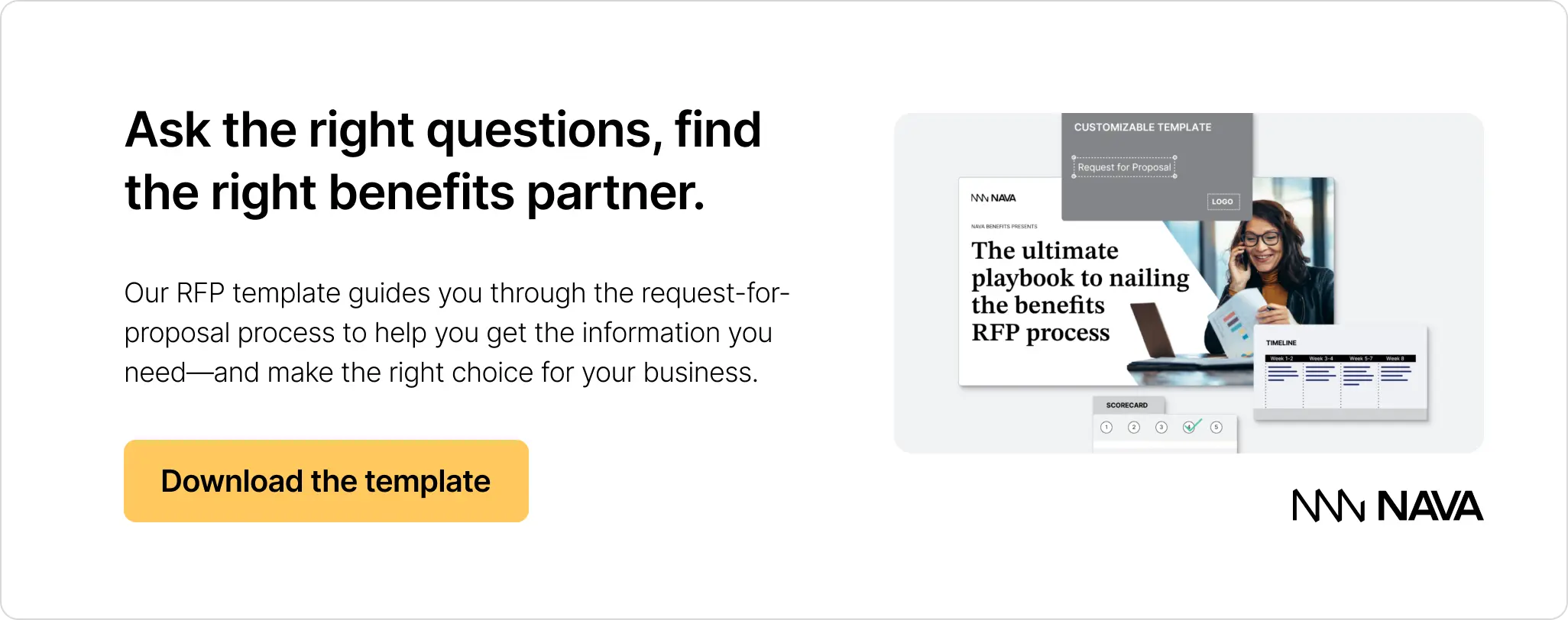
How to write a benefits broker RFP (step-by-step)
If you’re evaluating how to write a benefits broker RFP, the key is clarity. A strong RFP helps brokers provide thoughtful responses and makes it easier for your team to compare them objectively.
Step 1: Define your goals and priorities
Start by clarifying what you want from a broker relationship.
Ask internally:
- What problems are we trying to solve?
- What does success look like in 12–24 months?
- Do we want strategic consulting, execution support, or both?
Common priorities include:
- Cost containment and smarter plan design
- Improved employee engagement and education
- Compliance and risk mitigation
- Better data, reporting, and decision support
Your goals should guide every section of the RFP.
Step 2: Outline the scope of services
Clearly define what you expect from your employee benefits broker. This prevents misalignment later.
Typical scope areas include:
- Medical, dental, vision, and ancillary benefits
- Open enrollment planning and execution
- Employee support and advocacy
- Compliance guidance (ACA, ERISA, COBRA, state regulations)
- Renewal strategy and carrier negotiations
- Ongoing reporting and benchmarking
Be explicit about whether you expect year-round strategic support or primarily transactional services.
Step 3: Include the core sections of an employee benefits broker RFP
A complete employee benefits broker RFP usually includes:
- Company overview: Workforce size, locations, industry, and growth plans
- Current benefits overview: Plans offered, renewal timing, and key challenges
- Broker experience & team: Account structure, credentials, and relevant expertise
- Service model & support: Day-to-day support, escalation paths, and service levels
- Technology & data: Reporting, analytics, and benefits administration tools
- Fees & compensation: Transparency into commissions, fees, and incentives
- References & case studies: Examples of outcomes for similar employers
This structure makes broker responses easier to evaluate side by side.
Questions to ask a benefits broker in an RFP
The quality of your RFP depends heavily on the questions you ask. The best questions to ask a benefits broker focus on how the broker works, not just what they sell.
Below are sample benefits broker RFP questions you can adapt.
Strategy & cost management
- How do you help clients manage and reduce benefits costs over time?
- What data do you use to inform plan design and renewal strategy?
- How do you approach carrier and vendor negotiations?
Service model & team
- Who will support our account day-to-day, and how many clients do they manage?
- How do you support employees outside of open enrollment?
- What service-level commitments do you provide?
Compliance & risk
- How do you help employers stay compliant with federal and state regulations?
- How do you proactively identify and address compliance risks?
Measurement & results
- How do you define success for your clients?
- What metrics do you track and report on regularly?
- Can you share case studies from companies similar to ours?
Including clear, specific questions helps you distinguish between brokers who are reactive and those who are truly strategic.
How to evaluate benefits broker RFP responses
Once responses are in, use a structured evaluation process to avoid bias and misalignment.
Best practices include:
- Scoring responses across defined categories (strategy, service, cost, compliance)
- Weighting criteria based on your priorities
- Shortlisting 2–3 finalists for presentations or interviews
- Involving key stakeholders early in the review process
A consistent scoring framework makes it easier to justify your final decision internally. Read more about how to evaluate an RFP in our recent blog, RFP evaluation done right: how to choose a benefits broker with confidence.
Common mistakes to avoid in a benefits broker RFP
Employers often undermine their RFPs unintentionally. Common pitfalls include:
- Asking overly generic questions that produce vague responses
- Focusing only on cost instead of long-term value
- Not clarifying expectations for ongoing service
- Skipping stakeholder alignment before issuing the RFP
Avoiding these mistakes leads to better responses and stronger broker partnerships.
FAQs about benefits broker RFPs
How long does a benefits broker RFP process take?
Most employee benefits broker RFP processes take 6–8 weeks, from planning through final selection.
Do small companies need a benefits broker RFP?
Yes. Even smaller employers benefit from a structured RFP to ensure transparency, value, and alignment with growth plans.
Should we involve our current broker in the RFP?
In many cases, yes. Including your current broker provides a benchmark and ensures a fair comparison.
Key takeaways
- A benefits broker RFP helps employers select the right long-term partner.
- Knowing how to write a benefits broker RFP leads to better responses and easier comparisons.
- Asking the right questions to ask a benefits broker reveals how brokers actually operate.
- A structured employee benefits broker RFP process improves outcomes for employers and employees alike.
.webp)


.webp)