


The six priorities behind every smart renewal decision

Before you evaluate a single renewal option, get clear on what you're optimizing for. There are six priorities at play in every renewal decision: costs, benefits quality, bandwidth, employee satisfaction, employee disruption, and risk tolerance: Knowing where you stand on each one changes everything. HR leaders who know their priorities in advance make faster, better decisions when the pressure hits.
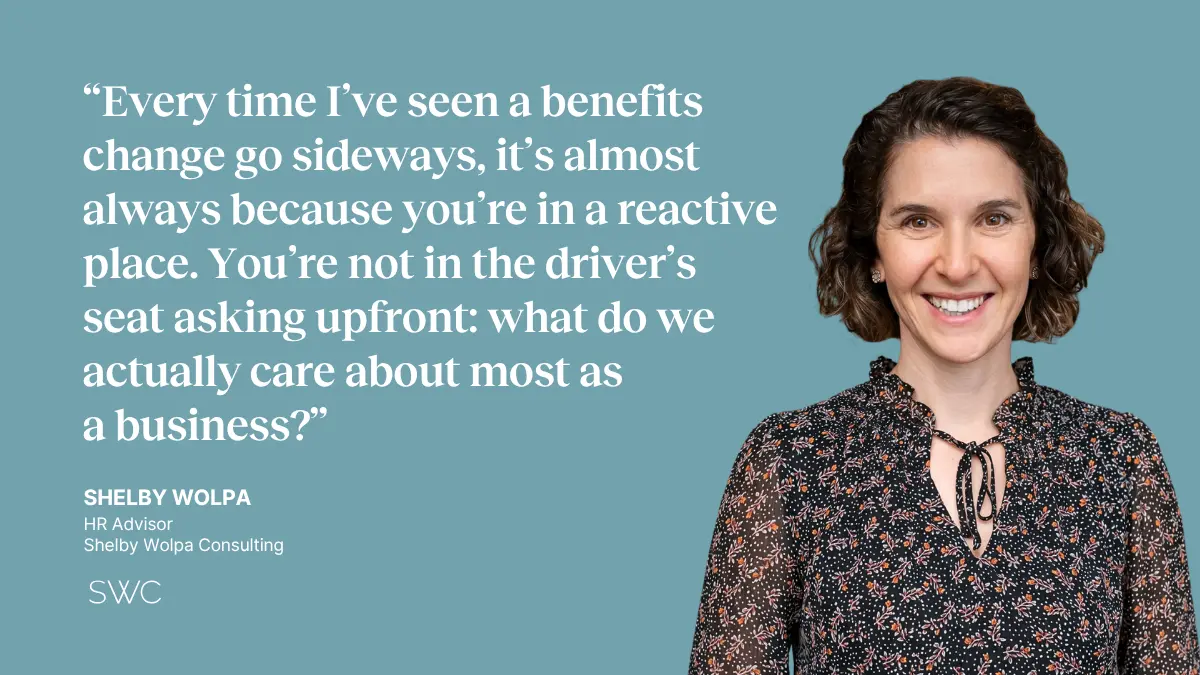
Every benefits leader has a moment, right before a renewal conversation, when someone finally asks the question that should have come first: what do we actually care about most here? Too often, that question gets asked in the room, under pressure, with a CFO waiting for an answer. By then, it's too late to think it through. You're just reacting.
The good news is this is entirely avoidable. Before you compare a single renewal option, get clear on your priorities. Here's a practical framework from Nava's Renewals Unfiltered webinar series for doing exactly that.
Why this step gets skipped, and what it costs you
The pattern is more common than most HR leaders want to admit. A renewal number lands, options get evaluated under pressure, and decisions get made without a clear sense of what the organization actually values most. By the time anyone asks the right question, it's too late to answer it well.
Skip this step, and you're not making a decision. You're reacting to whatever number your renewal happens to come in at, with no framework for weighing it.
The six priorities behind every renewal decision
Before you look at a single plan or carrier, get specific about what you're actually optimizing for. There are six priorities at play in every renewal decision:
- Costs: Do you have a target budget you need to stay within?
- Benefits quality: Do you need to stand out, or are there gaps you need to fill?
- Bandwidth: Does your team have the capacity to manage more complexity?
- Employee satisfaction: What are people saying about their benefits today?
- Employee disruption: How attached are employees to what they currently have?
- Risk tolerance: How much variability in spend can you actually live with?
Most HR teams have a rough sense of where they land on these. Very few have written it down, and even fewer have tested it against more than one scenario.

Rank your priorities twice: once for 5%, once for 40%
Here's the exercise. Stack-rank these six priorities for two different scenarios: one where your renewal comes in at 5%, and one where it comes in at 40%. Write both lists down.
If your renewal comes in at 5%
At a modest increase, your top priorities might be benefits quality, employee satisfaction, and cost, in that order. You're in a reasonably good spot. You want to stay competitive, and cost matters, but it isn't the only thing that matters.
If your renewal comes in at 40%
Now imagine that same renewal comes in at 40% instead. Cost jumps to the top of the list. Employee disruption, which might not have made your top five at 5%, moves up right behind it, because you know any significant plan change means a difficult all-hands conversation. Bandwidth might drop off the list entirely, because you'll find the capacity if you have to.
The gap is where your real flexibility lives
The difference between your 5% list and your 40% list tells you which priorities are genuinely non-negotiable, and which ones you've been treating as non-negotiable simply because you've never been forced to choose. You do not want to be figuring that out in the moment, with your CFO in the room. You want to already know which levers you can pull.
The five tradeoffs you'll run into
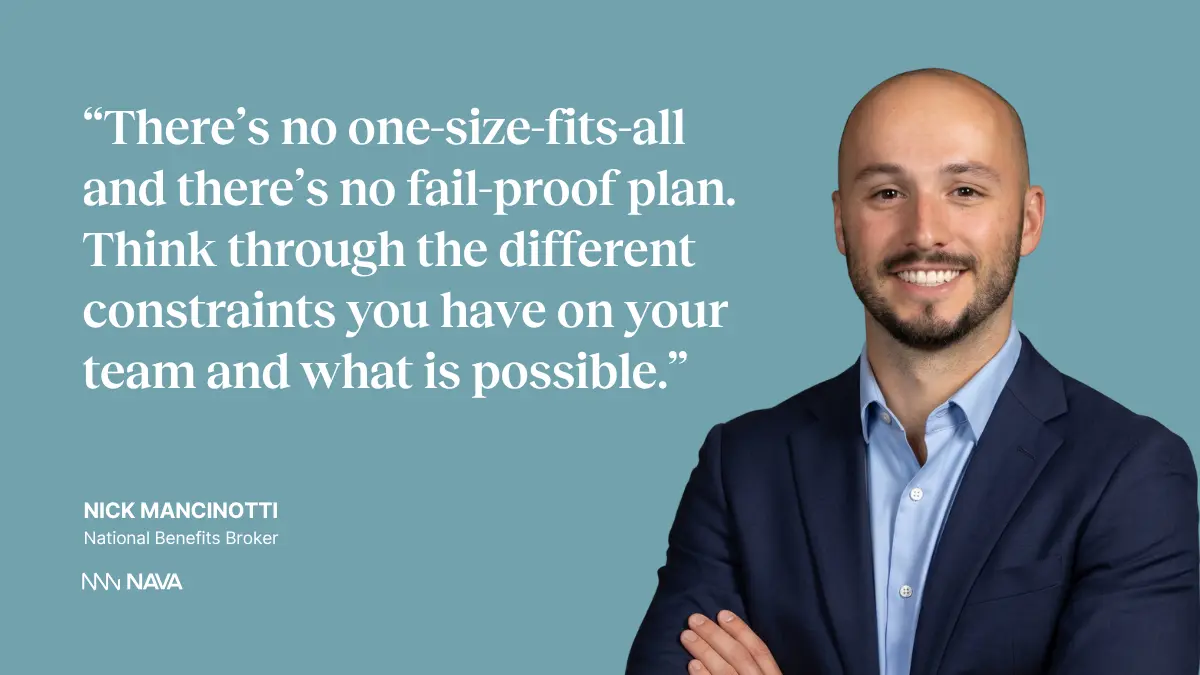
Once you know your priorities, the next thing to understand is that no renewal strategy gets you everything. Every option involves giving something up somewhere, and it almost always comes back to one of five tensions between cost and something else:
- Cost vs. benefits quality. Can you absorb the cost without degrading the plan?
- Cost vs. bandwidth. Does your team have the capacity to manage more complexity?
- Cost vs. employee satisfaction. What will people actually accept?
- Cost vs. disruption tolerance. How much change can you introduce right now?
- Cost vs. risk tolerance. How much spend variability can your organization stomach?
Some of the best options financially come with more unpredictability, and that's a conversation worth having before you're in the middle of a negotiation, not during it.
Do this in July, not October
The employers who navigate renewal best are the ones who already knew where they could bend before the pressure hit. That means sitting down with your team now, being honest about where you actually have room to move and where you don't.
Ask yourselves:
- Which of these tradeoffs would your leadership accept?
- Which ones would create real problems internally?
- Where have you been treating a priority as fixed when it's actually flexible?
Getting clear on these questions before the pressure hits is what lets you make a decision instead of just reacting to one. And that conversation is a lot easier to have now than it is once your renewal number is already on the table.
This framework is one piece of what we covered in Nava's Renewals Unfiltered webinar series. If you want the full picture, including what your broker should be doing on your behalf and how to forecast what's coming, talk to a Nava benefits advisor about building your renewal strategy before the pressure hits.



.webp)