


How to bring your CFO into the renewal conversation early

Renewal season turns into a defensive scramble when leadership only sees the number after it's already final. Bringing your CFO in months earlier, and translating claims trends and funding risk into language finance already uses, changes that same number from a surprise into a decision people helped shape. Self-funding isn't the riskier option: walking into a renewal with no claims data and no shared read on risk tolerance is. A fixed premium doesn't remove that risk, it just hides where it shows up. A simple exercise, ranking cost, benefits quality, team bandwidth, employee satisfaction, disruption tolerance, and risk tolerance against both a mild and severe renewal scenario, shows an organization exactly where its real flexibility sits before the number ever arrives.
Every fall, the same scene plays out at mid-size companies across the country. HR walks into a leadership meeting with a renewal number. Leadership sees it for the first time in that meeting. And the conversation that follows is less "strategy session" and more "damage control."
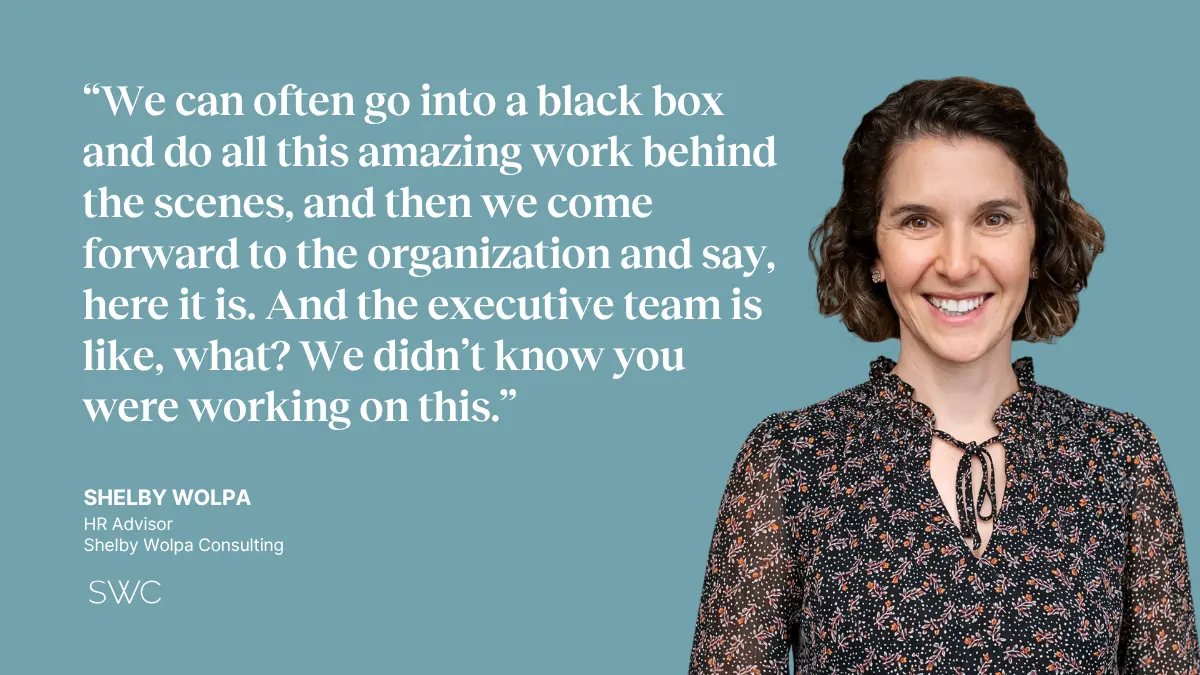
That's the black box problem. HR has been living with the plan, the claims trends, and the market pressure all year. Leadership hasn't. So when the number finally lands, it doesn't feel like the outcome of a process, it feels like a surprise leadership had no part in.
An employee benefits strategy is only as strong as the alignment behind it. And that alignment can't start the week the renewal letter arrives.
What "being a black box" costs you at renewal
When HR is the only person who understands what's driving the number, a few predictable things happen:
- The CFO reacts to price, not context. Without the backstory, all a CFO sees is a percentage increase. That's the least useful way to evaluate a renewal.
- Every option looks equally risky. Self-funding, level funding, plan design changes, all of it sounds like uncertainty to someone hearing about it for the first time under time pressure.
- HR absorbs the pressure alone. The renewal stops being an organizational decision and becomes one person's problem to defend.
None of this is a knock on leadership. It's simply what happens by default when they only hear about the renewal once the number is final: there's no time left to form an opinion, so all that's left to react to is the price tag.
Bring them in months earlier and the same conversation looks completely different. They're weighing tradeoffs alongside you instead of reacting to a decision that already feels made, and the renewal number becomes one data point in an ongoing conversation instead of the whole conversation.
Why this is a strategy conversation, not an admin task
Here's the reframe worth making before renewal season starts: benefits renewal is a risk management conversation, not a paperwork cycle.
That distinction matters more than it might seem. Health benefit costs are rising at their fastest pace in nearly two decades. PwC's Health Research Institute projects a 9% medical cost trend for the commercial group market in 2027, the highest increase in 17 years, driven by pharmacy spending, specialty drugs, and rising provider reimbursement pressure. That's an increase from 8.5% just a year earlier, and it comes on top of several years of already elevated cost growth.
That's not a number HR should be absorbing alone, and it's not one leadership should be hearing about for the first time in Q4.
How to bring your CFO in early
Getting your CFO aligned isn't one conversation, it's a handful of smaller moves made well before renewal season peaks. Here's what that looks like in practice.
Start months before renewal, not at the finish line
The employers who handle renewal season well aren't the ones who got a lucky number. They're the ones who already knew their priorities, already modeled their options, and already had leadership oriented before the number arrived. By the time it lands, they're making a decision, not starting a process.
That shift starts with timing. If the conversation with finance begins the same week the renewal letter does, the leverage conversation is already over.
Translate benefits language into finance language
CFOs don't need a primer on plan design. They need the same information translated into terms they already use to make decisions:
- Claims trend versus budget, not just "costs are up"
- Funding risk and variability, not just "premiums" or "rates"
- Multi-year cost trajectory, not just this year's number
A renewal conversation framed around trend, budget variance, and risk exposure reads as a finance conversation. A renewal conversation framed around plan design and carrier relationships reads as an HR administrative update. Same underlying situation, very different reception.
Surface risk tolerance before you need an answer
Before you're mid-negotiation is the time to ask your CFO how much spend variability the organization can actually live with, not after. Self-funding sounds appealing right up until a CFO hears "variable spend" for the first time under pressure. Have that conversation early, when it's hypothetical, instead of late, when it's urgent.
If self-funding comes up, reframe it before your CFO does
When self-funding enters the conversation, most CFOs land on the same word: risk. That reaction is fair. Self-funding does mean the company pays claims directly instead of a fixed premium, so costs can vary. But it's worth walking in ready to reframe that reaction rather than let it sit unchallenged:
- Point out that a fixed premium doesn't remove risk, it just hides where it shows up. Carriers price their own claims risk into that premium. The company absorbs that cost either way, just without visibility into what's driving it.
- Bring the stop-loss structure with you, not after. If self-funding is on the table, come in already paired with a stop-loss number. A capped, bounded exposure is a very different conversation than open-ended variability.
- Name the data as the tradeoff for the variability. In exchange for taking on claims risk, the company gets visibility it doesn't have today, and that visibility is what makes future renewals manageable instead of reactive.
- Make the real comparison explicit. The alternative to self-funding isn't safety, it's a fully insured renewal with no data behind it. Say that directly instead of letting "self-funded" sound riskier than the status quo.
Framed this way, you're not asking your CFO to take a leap of faith. You're bringing a decision they can actually study, backed by data and a bounded downside, which is exactly the kind of conversation most CFOs want to have.
Come with data, not just a number
A preliminary budget conversation with your CFO shouldn't sound like "here's the number." It should sound like "here's the range we might be looking at, and here's what we're already doing about it." That requires walking in with:
- Claims data, if your plan size and funding structure allow you to access it
- A benchmark showing how your plan compares to similar employers
- A point of view on which levers you're already evaluating
Clarity here does double duty. It gives your CFO something concrete to react to instead of an abstract percentage, and it establishes HR as the person driving the strategy instead of the person delivering bad news.
A priorities exercise you can run today
You don't need a renewal number in hand to start this, and it works well as something to bring your CFO into directly.
Rank these six priorities in order of importance to your organization:
- Cost: Is there a hard budget ceiling you need to stay within?
- Benefits quality: How much does it matter that your plan stands out, and where are the gaps today?
- HR and finance bandwidth: How much capacity does your team have to manage something more complex?
- Employee satisfaction: What are employees saying right now, and where are the pain points?
- Tolerance for disruption: How attached are employees to what they have, and how do they typically respond to change?
- Risk tolerance: How much variability in spend can the organization actually live with?
Then do it twice: once assuming a mild renewal, around 5%, and once assuming a severe one, 30 to 40%. Where the ranking holds steady between those two scenarios is your non-negotiable list. Where it shifts is where your real flexibility lives, and that's exactly the information your CFO needs before, not after, the number arrives.
What this conversation should actually cover
Once your CFO is in the room, the conversation should go beyond the top-line number. A useful pre-renewal discussion with finance typically covers:
- Claims trend visibility: What's actually driving cost, not just that cost is rising
- Funding structure options: Where you sit today (fully insured, level funded, self-funded) and whether that's still the right fit
- Stop-loss exposure: If you're already self-funded or level-funded, what your stop-loss renewal looks like and whether a known high-cost claimant could change that number significantly
- Contribution strategy: How much of any increase gets absorbed by the company versus shared with employees, and what that decision protects or trades away
- Multi-year budget planning: Whether this year's number is a one-time pressure or part of a longer trend the budget needs to account for
Know what you're protecting going in, whether that's a specific contribution split, a benefit employees rely on, or pharmacy coverage. Having that clarity before the conversation starts means fewer decisions get made under pressure in the room.
FAQ
How do I get my CFO interested in benefits strategy?
Frame it in the language finance already uses: risk, trend, budget variance, and multi-year cost exposure. A CFO is far more responsive to a risk management conversation than a plan design update.
What should I bring to a renewal strategy meeting with leadership?
Claims data (if accessible), a benchmark comparison against similar employers, and a clear point of view on which funding or plan design levers you're evaluating and why.
When should HR start talking to finance about renewal?
Months before the renewal letter arrives, not after. The goal is a preliminary conversation about the likely range and the levers on the table, well before there's a specific number to react to.
Get ahead of your next renewal conversation
Walking into renewal season with data, benchmarks, and an aligned leadership team isn't just less stressful, it's how HR leaders turn renewal from a defensive conversation into a strategic one. If you want a clearer picture of where your plan stands before your next renewal lands, talk to a Nava benefits advisor.
Hear more from benefits experts on getting your organization ready for a renewal



.webp)