


How an employee benefits decision support tool helps employees choose health plans with confidence

Choosing a health plan is one of the most confusing decisions employees make each year, and many end up in plans that don’t fit their needs. An employee benefits decision support tool helps employees compare options based on their personal healthcare needs, costs, and preferences. With the right decision support in place, employees can choose health plans with confidence and employers can deliver a better benefits experience.
Choosing a health plan during open enrollment is one of the most important decisions employees make all year, as it carries real financial and health consequences for them and their families. The average annual premium for employer-sponsored family health coverage has climbed to nearly $27,000, with employees contributing about $6,850 out of pocket. A poor plan choice can significantly impact household finances, access to care, and long-term health outcomes. At the same time, research shows that many employees are making these high-stakes decisions with limited information — a WorldatWork survey found that roughly 50% of employees spend less than an hour choosing their health plan and often misunderstand key cost drivers like prescription coverage and out-of-pocket maximums. The result is a decision that feels quick in the moment but can have lasting consequences throughout the year.
For employers and HR teams, this creates a real challenge. When employees choose plans that don’t align with their needs, the consequences show up later in the year through frustration, unexpected costs, and a flood of benefits questions.
The good news is that this problem is solvable, especially with the right employee benefits decision support tools in place. With the right combination of education, guidance, and modern decision support tools, employers can help employees make confident, informed healthcare decisions that actually fit their lives.
Why employees struggle to choose the right healthcare plan
Health insurance is complex by design. Even when employers offer a thoughtfully curated set of plans, employees are often asked to evaluate tradeoffs they have little experience with.
Common challenges include:
- Too many unfamiliar terms, like deductibles, coinsurance, out-of-pocket maximums, and HSA eligibility
- Difficulty predicting future healthcare needs, especially for employees with changing family or health situations
- A tendency to focus on the monthly premium instead of total annual cost
- Fear of choosing a plan that feels risky, even if it may be more cost effective
As a result, many employees default to what feels safest. They choose the plan with the lowest deductible, the plan they had last year, or the option that sounds most comprehensive, even if it costs them more over time.
This is not a reflection of employee disengagement. It is a reflection of how difficult the decision truly is without personalized context.
What does the wrong health plan really cost employees and their families?
When employees end up in the wrong health plan, the impact is felt on both sides.
For employees, it can mean:
- Higher out-of-pocket costs than expected
- Paying for coverage they don’t use
- Delaying care due to confusion or fear of costs
- Stress and frustration when medical bills arrive
For employers and HR teams, it often leads to:
- Increased benefits questions throughout the year
- Lower perceived value of the benefits program
- Reduced trust during future open enrollment periods
These issues compound over time, making it harder for employees to feel confident in their benefits and harder for HR teams to manage enrollment efficiently.
Why traditional benefits education isn’t enough
Most HR teams already invest significant effort into helping employees understand their benefits. This might include open enrollment meetings, plan comparison guides, recorded webinars, or office hours with benefits experts.
These approaches are important and necessary, but they have limitations.
Education is typically one-size-fits-all. It explains how plans work, but it doesn’t help employees understand which plan is best for them personally. One employee’s ideal plan may be completely wrong for another, even if they are looking at the same options.
Human support also doesn’t always scale. As organizations grow, it becomes harder to provide individualized guidance to every employee within tight enrollment timelines.
What’s missing: a way to bridge general education with personalized recommendations.
What an employee benefits decision support tool looks like today
Modern benefits programs are moving beyond static comparisons toward employee benefits decision support tools. Decision support tools help employees evaluate their health plan options based on their own needs, preferences, and expected usage.
Instead of asking employees to interpret complex plan designs on their own, decision support tools guide them through a structured experience. Employees answer simple questions about things like:
- Family size and dependents
- Prescription medications
- Expected medical care
- Provider preferences
From there, the tool helps translate that information into meaningful insights. Employees can see how different plans might perform for them over the course of a year, not just what they cost per paycheck.
The result: clarity. Employees move from guessing to making informed decisions with confidence.
How Nava’s employee benefits decision support tool helps employees choose with confidence
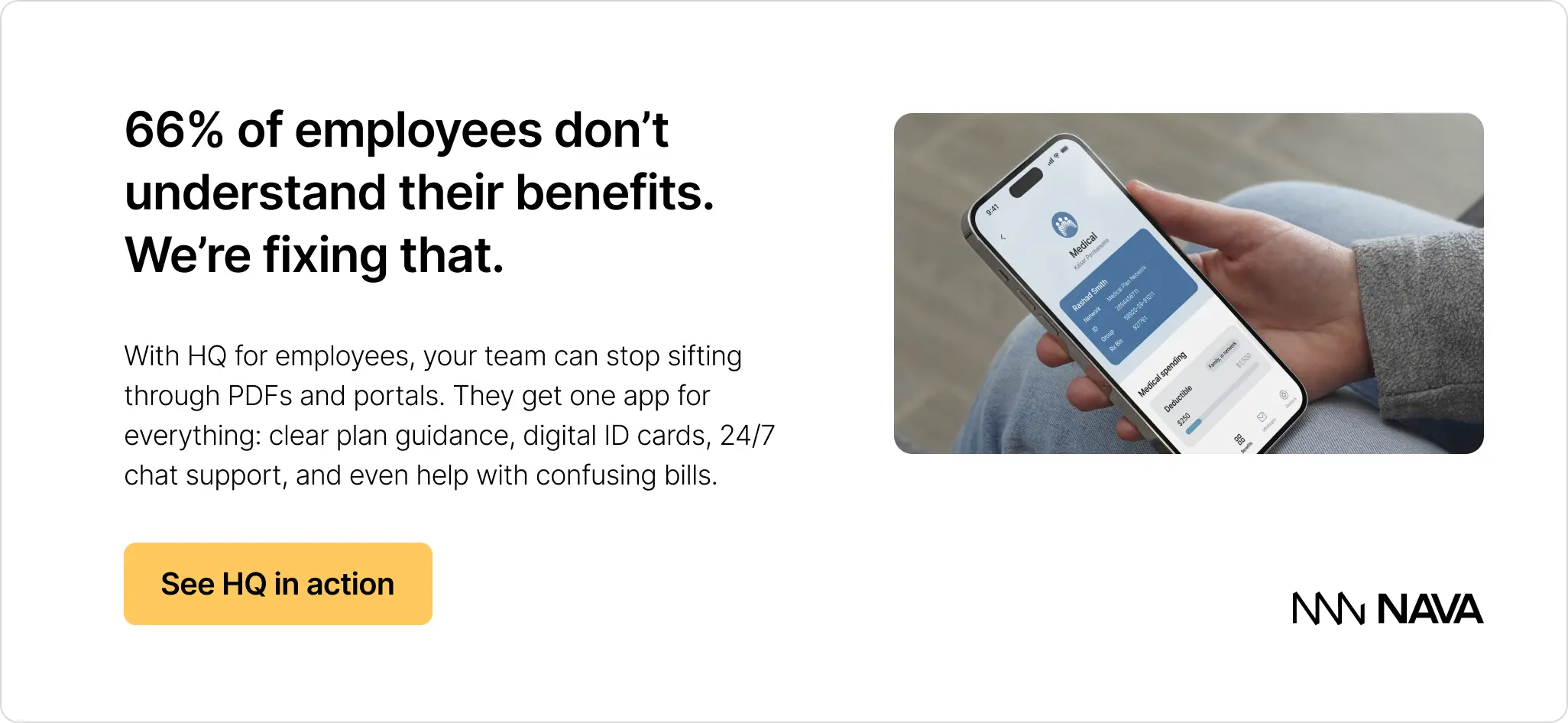
Nava’s employee benefits decision support tool is built directly into the HQ for Employees, Nava’s app for employees and their families, making it easy for employees to get help exactly when they need it.
During open enrollment, employees are guided through a simple set of questions about their healthcare needs. Based on their responses, the tool surfaces personalized plan recommendations that reflect both cost and coverage considerations.
Employees can:
- Compare plans based on estimated total cost, not just premiums
- Understand key differences between options in plain language
- Check provider network considerations
- Get additional support if they have questions along the way
Because decision support lives inside the same app employees use to manage their benefits, the experience feels seamless. There’s no need to jump between tools or interpret dense PDFs.
For HR teams, this means employees come to enrollment conversations better prepared and more confident in their choices.
How HR teams can set employees up for better decisions
An employee benefits decision support tool is most effective when it’s part of a broader enrollment strategy. HR teams can take a few simple steps to maximize its impact:
- Introduce decision support early. Let employees know ahead of open enrollment that personalized guidance will be available, so they can plan to engage with it.
- Embed decision support into your communications. Link directly to the tool in enrollment emails, benefits guides, and internal portals.
- Reinforce that help is available. Encourage employees to use the tool and remind them that additional support is there if they need it.
- Review outcomes after enrollment. Over time, decision support can help reduce mismatched plan selections and improve overall satisfaction with benefits.
Helping employees feel confident in their choices
Choosing a healthcare plan will never be simple, but it doesn’t have to feel overwhelming. When employees are supported with the right tools and guidance, they’re far more likely to choose plans that meet their needs and avoid unpleasant surprises later.
By combining clear benefits education with an employee benefits decision support tool, employers can turn open enrollment into a moment of empowerment instead of confusion.
For Nava customers, decision support makes it easier for employees to choose with confidence and for HR teams to deliver a better benefits experience, year after year.

.webp)

.webp)