


Self-funded insurance 101: how to gain transparency and control over healthcare spend

Rising healthcare costs and unpredictable renewals are pushing more employers to explore self-funded insurance as a smarter alternative to fully insured plans. In this Self-Funding 101 guide, Nava Benefits and Imagine360 break down how self-funding works, how risk is managed through stop-loss coverage, and why it can offer greater transparency and long-term cost control. Learn what it takes to get started and how HR leaders can build the case with finance partners.
For many HR leaders, healthcare renewals aren’t just another line item, they’ve become a recurring financial shock. In 2025, employer-sponsored health coverage continued to hit record-high costs, with average family premiums nearing $27,000 per year, alongside steady year-over-year increases that continue to outpace wage growth and inflation.
In a fully insured model, those increases often show up as annual renewal hikes that feel opaque, unpredictable, and difficult to influence.
That’s why more employers are exploring alternative funding approaches, including self-funding, as one of the most meaningful levers HR can pull to regain control over healthcare spend.
In our recent Self-Funding 101 webinar, Nava Benefits partnered with Imagine360 to break down what self-funding actually looks like in practice, why more employers are considering it now, and how strategies like stop-loss coverage and reference-based pricing can help bring greater transparency and predictability to healthcare costs.
This guide captures the key takeaways from that conversation and offers a practical starting point for HR leaders who want to evaluate whether self-funding could be the right fit, with language and logic that helps bring finance partners along.
Why more employers are exploring self-funding
For many employers, fully insured coverage has long been the default. But as healthcare costs continue to rise and renewals become more unpredictable, that model is starting to feel harder to sustain.
HR teams are being asked to balance competing demands: protect employee experience, manage affordability, and respond to finance leaders who want more visibility and control over one of the largest expenses on the balance sheet.
That’s why self-funding is gaining traction. Employers are increasingly exploring self-funding not just as a way to reduce costs, but as a strategy to gain more transparency, flexibility, and long-term predictability.
Employers are feeling pressure from every direction:
The fully insured model comes with real limitations:
- Costs keep climbing: Premiums and deductibles continue to outpace wages and inflation.
- Flexibility is limited: Many employers are stuck with one-size-fits-all carrier options.
- Transparency is low: Claims data is often inaccessible until renewal, when it’s too late.
- Renewals bring surprises: Rate hikes can hit with little warning and few levers to respond.

The cost trend driving the shift:
The numbers behind employer-sponsored healthcare are staggering:
- Average annual family coverage costs around $25,000
- Premiums have increased 314% since 1999
This is why more HR and finance teams are asking the same question: Is there a better way to pay for healthcare?
What is self-funding?
At its simplest, self-funding means: Your organization pays for healthcare claims directly, rather than paying fixed premiums to a carrier.
In practice, self-funding allows employers to:
- Spend dollars on actual care, not carrier margins
- Access claims insights to make smarter decisions
- Customize the plan around employee needs
- Protect against catastrophic risk through stop-loss coverage
Important clarification for HR teams: You’re not doing this alone
One of the biggest misconceptions about self-funding is that it means employers are suddenly responsible for managing healthcare claims day-to-day.
In reality, self-funding doesn’t mean HR is approving claims, handling medical decisions, or taking on administrative complexity internally.
Instead, employers work with a dedicated set of partners, including a third-party administrator (TPA), who manages the operational side of the plan.
Self-funding changes how the plan is paid for, but with the right partners in place, the experience for HR teams and employees is often very similar, just with more transparency and control behind the scenes.
The key building blocks of a self-funded plan
Self-funding gives employers more choice because the carrier “bundle” is broken into components.
A typical self-funded plan includes:
- Third Party Administrator (TPA): Manages claims processing and plan operations
- Stop-Loss Insurance: Protects against large or unexpected claims
- Pharmacy Benefit Manager (PBM): Manages prescription pricing and pharmacy claims
- Point Solutions: Targeted support for areas like diabetes, MSK, or mental health
- Alternative pricing strategies: Including reference-based pricing
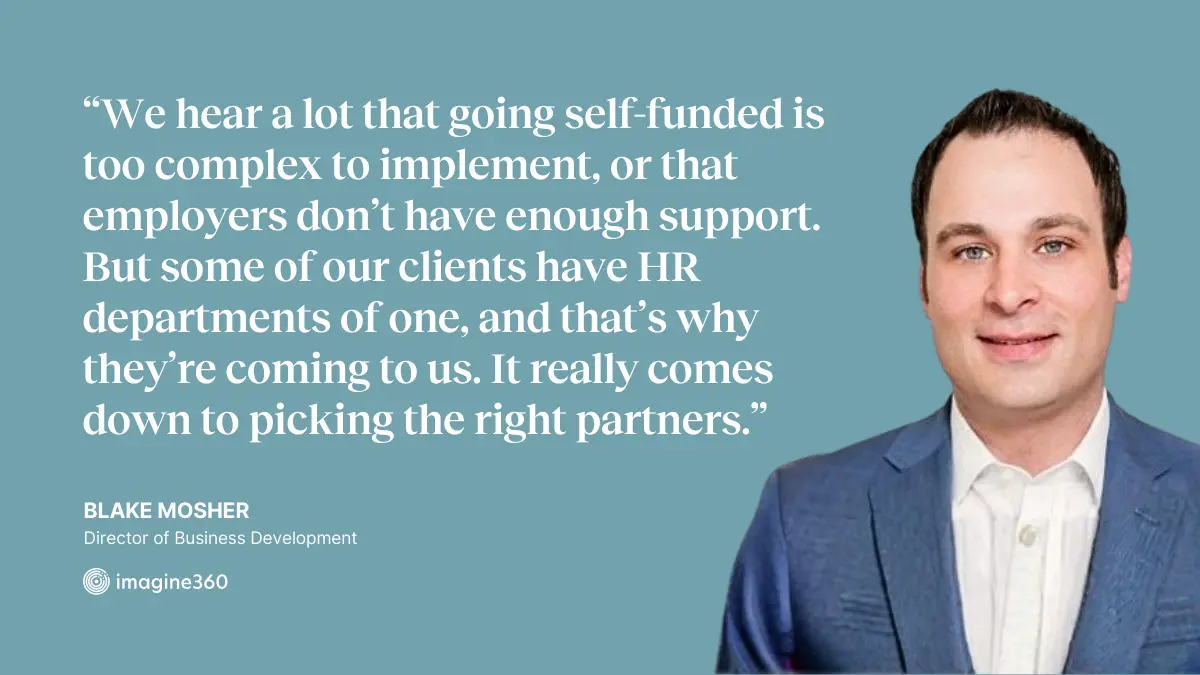
Is self-funding more risky than a fully insured plan?
It’s completely normal for self-funding to raise questions about financial risk, especially for CFOs and finance teams who are used to the predictability of fixed monthly premiums.
On the surface, paying claims directly can sound like taking on more exposure. The first question is almost always: What happens if someone has a million-dollar claim?
But the reality is that self-funding is not an all-or-nothing gamble. Employers don’t step into this model without protections in place, and the financial risk is actively managed, not left to chance.
That’s where stop-loss coverage comes in.
Stop-loss insurance is designed to cap liability and protect employers from large, unexpected claims, giving you clearer guardrails and more confidence in forecasting year over year.
Stop-loss insurance helps employers:
- Cap exposure at the individual level
- Limit volatility across the full group
- Forecast worst-case scenarios more clearly
A finance-friendly reframing:
Many leaders assume self-funding increases uncertainty, but the opposite can be true:
- You gain access to claims data
- You can forecast trends earlier
- You have more levers to manage cost over time
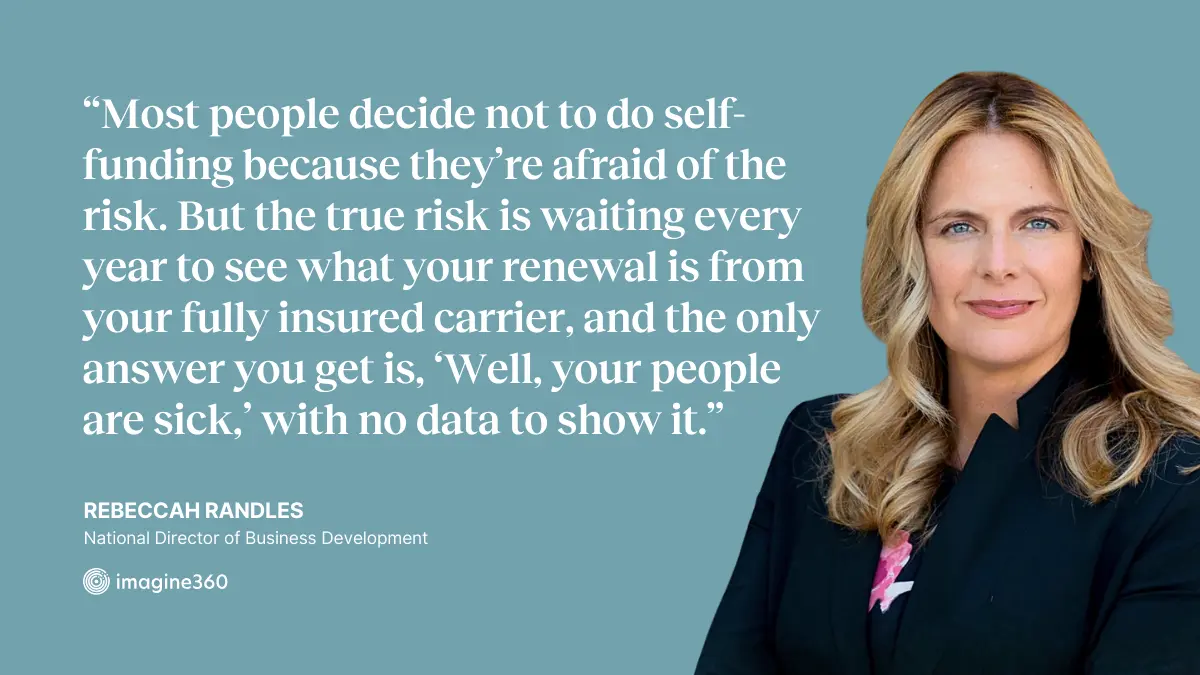
A smarter way to pay claims: reference-based pricing
Some employers take self-funding further by changing how claims are paid.
Reference-based pricing (RBP) aligns payments with Medicare benchmarks or true cost-plus pricing rather than inflated facility charges.
Why it matters:
- PPO discounts are often based on inflated starting prices
- Employers may pay 3–4x more than the actual cost of care
- Lower claim costs can reduce employee out-of-pocket burden
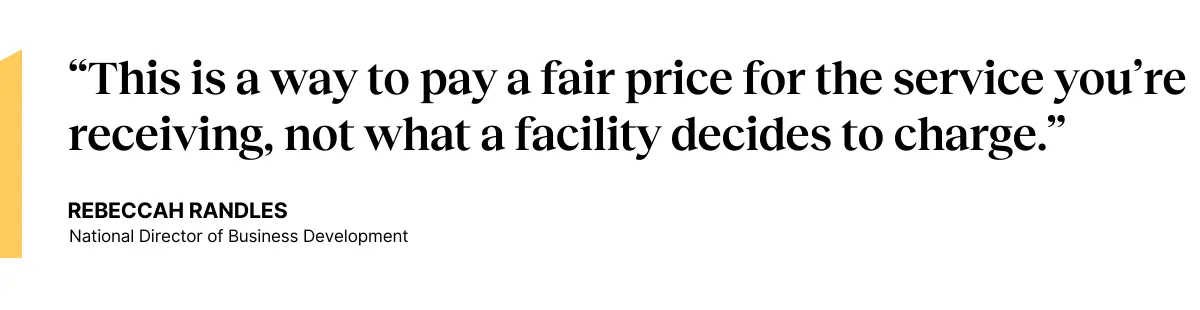
Self-funding is often associated with large enterprises, but that’s no longer the reality of today’s market. With the growth of level-funded options, more flexible stop-loss coverage, and stronger administrative partners, self-funding has become increasingly accessible for mid-sized employers as well.
Rather than being a strategy reserved for companies with thousands of employees, many organizations begin exploring self-funding once they reach a size where they want more control over costs, better data, and more flexibility than the fully insured market allows.
Just as importantly, self-funding is most successful when HR and finance are aligned from the start. Because it impacts both employee benefits and financial planning, the decision works best when both teams can come to the table together with a shared understanding of goals, risk tolerance, and long-term strategy.
A strong starting point is often 50+ employees, along with:
- Some risk tolerance
- A strong HR + finance partnership
- Capacity for more oversight
- Interest in long-term cost strategy
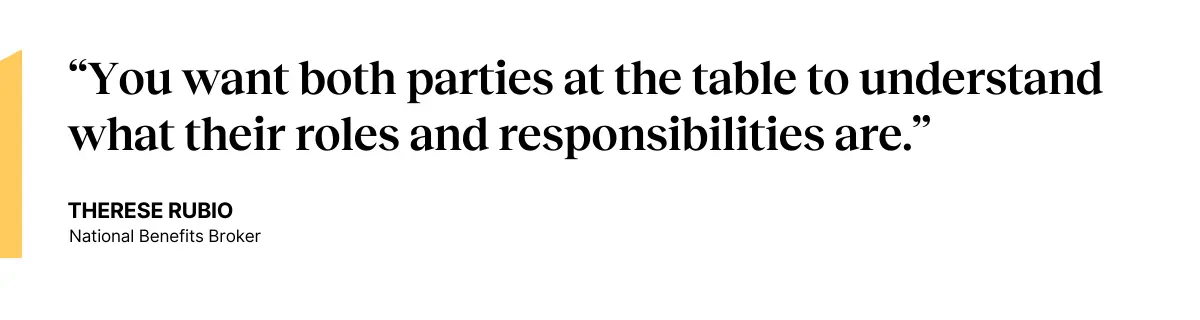
When should employers start planning?
The biggest mistake employers make is waiting until renewal season to explore self-funding.
Self-funding is not a decision you want to make under pressure in October, after a surprise increase lands. The most successful transitions happen when employers start the conversation early, with enough time to bring the right internal stakeholders to the table.
Because self-funding touches both benefits strategy and financial planning, HR leaders often need partnership and buy-in from:
- Finance and budgeting teams
- Executive leadership
- Internal payroll or operations stakeholders
Just as importantly, the move to self-funding doesn’t have to be all at once. For many employers, the road to self-funding is a multi-year strategy, starting with smaller steps like level funding, building comfort with claims visibility, and gradually adding more flexibility over time.
Implementation takes time, vendor coordination takes time, and employee education takes time.
Starting early helps you:
- Avoid rushed decisions
- Explore multiple funding options
- Build internal alignment and finance confidence
- Educate employees well before open enrollment
- Roll out changes smoothly and strategically
Final takeaway: Self-funding is about strategy, not just savings
Self-funding is not a silver bullet, but it is one of the most powerful frameworks employers have to regain control over healthcare spending.
It’s not just about lowering next year’s renewal. It’s about building a sustainable benefits strategy that works for both HR and finance.
Ready to explore what self-funding could look like?
If your organization is facing rising renewals and limited options, now is the time to start planning.
Nava helps employers evaluate funding models, model risk, and build a benefits strategy that supports both employees and financial sustainability.
Want to understand what self-funding could look like for your organization? Let’s talk.


.webp)
.webp)